In today’s hyper-connected world, where digital operations are the lifeblood of nearly every business, the humble network switch plays an extraordinary role. But when we talk about the immense scale and complexity of modern data centers, the data center switch emerges as a true unsung hero, the critical junction where information flows at warp speed. Without these specialized devices, the seamless operation of cloud services, AI workloads, and vast enterprise applications would simply grind to a halt. This article dives deep into what makes a data center switch unique, how to choose the right one, and why it’s so fundamental to building a robust, future-proof network infrastructure.
What Exactly is a Data Center Switch and Why Does it Matter?
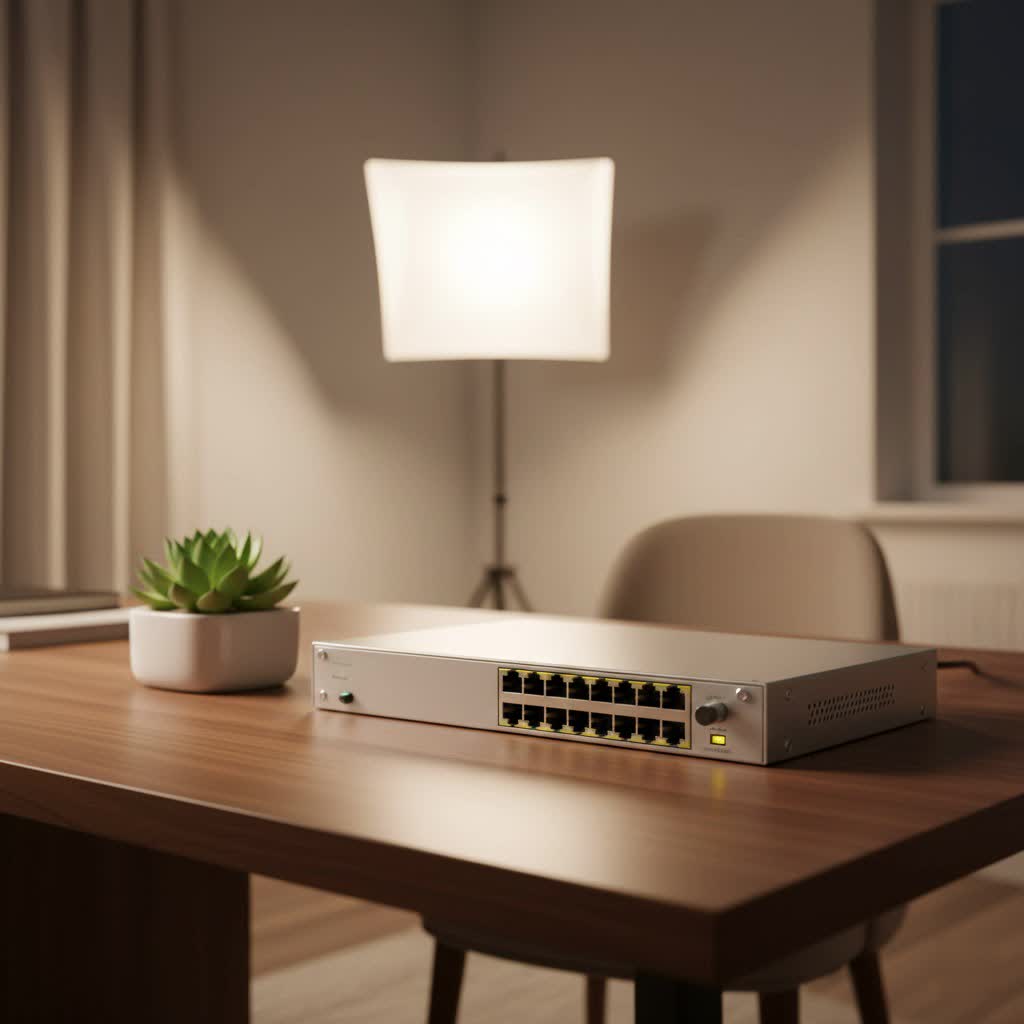
At its core, a network switch facilitates communication between devices on a network. But a data center switch is far more than just a standard switch. It’s a high-performance, specialized networking device designed to handle the incredible demands of a data center environment, connecting thousands of servers, storage systems, and other network devices. Its primary mission is to ensure rapid, efficient, and reliable data exchange across the entire infrastructure.
Imagine a bustling city where information is traffic. A standard office switch might be a small intersection handling local cars, while a data center switch is a complex, multi-layered freeway interchange managing millions of vehicles simultaneously, ensuring every byte reaches its destination without delay. This distinction becomes critical when you consider the sheer volume and velocity of data generated and processed daily in modern data centers, underpinning everything from your favorite streaming service to advanced scientific research.
Data Center Switches vs. Enterprise Switches: A Clear Distinction
|
Our Picks for the Best Network Switch in 2026
As an Amazon Associate I earn from qualifying purchases.
|
||
| Num | Product | Action |
|---|---|---|
| 1 | UGREEN Ethernet Switch, 5 Port Gigabit Ethernet Splitter, Plug & Play, Wall Mount & Desktop Network Switch Hub, Unmanaged, Compact, with LED, Fanless Quiet, for Internet Cable, Laptop, Router, NAS |

|
| 2 | TP-Link 5-Port Gigabit Ethernet Easy Smart Switch- Plug and Play - Desktop - Sturdy Metal w/Shielded Ports - Limited Lifetime Replacement (TL-SG105E), Black… |
|
| 3 | TP-Link 24 Port Gigabit Ethernet Switch Desktop/ Rackmount Plug & Play Shielded Ports Sturdy Metal Fanless Quiet Traffic Optimization Unmanaged (TL-SG1024S) |
|
| 4 | TP-Link Litewave 5 Port Gigabit Ethernet Switch - Desktop Ethernet Splitter - Unshielded Network Switch - Plug & Play - Fanless Quiet - Unmanaged (LS1005G) |
|
| 5 | NETGEAR 8-Port Gigabit Ethernet Unmanaged Essentials Switch (GS308) - Home Network Hub, Office Ethernet Splitter, Plug-and-Play, Silent Operation, Desktop or Wall Mount |
|
| 6 | UGREEN 16 Port Gigabit Switch, Plug & Play Ethernt Switch, Standard/VLAN Mode, Unmanaged, Sturdy Metal, Fanless Quiet, Desktop & Wall Mount Network LAN Splitter Hub for Laptop, Printer, NAS, Router |
|
| 7 | TP-Link 8 Port Gigabit Ethernet Network Switch - Ethernet Splitter - Plug & Play - Fanless - Sturdy Metal w/ Shielded Ports - Traffic Optimization - Unmanaged - Lifetime Protection (TL-SG108) |
|
| 8 | BrosTrend 2.5Gb Switch, 8 Port Network Switch 2.5 Gigabit, Unmanaged Ethernet Switch for Game Console, NAS, PC, Computer Networking Switch Plug & Play Fanless, Desktop Wall Mount, Lifetime Protection |
|
| 9 | TP-Link TL-SG105, 5 Port Gigabit Unmanaged Ethernet Switch, Network Hub, Ethernet Splitter, Plug & Play, Fanless Metal Design, Shielded Ports, Traffic Optimization |
|
| 10 | TP-Link TL-SG105S-M2 - 5-Port Multi-Gigabit 2.5G Ethernet Switch - Unmanaged Network Switch - Ethernet Splitter - Plug & Play - Desktop/Wall Mount - Silent Operation |
|
While both data center and enterprise switches connect devices, their design and capabilities are vastly different, tailored to their specific environments. Here’s a quick comparison:
| Feature | Enterprise Switch | Data Center Switch |
|---|---|---|
| Primary Role | Connect end-user devices (PCs, printers, IP phones) | Connect servers, storage arrays, other network devices |
| Traffic Type | North-South (client-server), relatively lower volume | East-West (server-to-server), extremely high volume |
| Performance | Good for general office use, lower bandwidth needs | Ultra-high throughput, extremely low latency is crucial |
| Port Density | Varies, often lower per rack unit | Very high, designed for maximum connectivity in compact spaces |
| Advanced Features | VLANs, basic QoS, port security | Advanced routing, large buffers, FCoE, VXLAN, MLAG, SDN, IBN support, deep telemetry |
| Reliability | High, but not always mission-critical | Absolute mission-critical, built for 24/7 operation with redundancy |
| Scalability | Modular for campus growth, typically fewer aggregation layers | Designed for massive scale-out (spine-leaf), high-speed interconnects |
“The specific demands of a data center, particularly with the rise of AI and real-time processing, necessitate a class of switch that is fundamentally different from what you’d find in a typical office,” explains Dr. Anya Sharma, a leading network architect. “It’s not just about speed; it’s about intelligent traffic management, resilience, and the ability to scale on demand.”
Navigating the Landscape: Types of Data Center Switches
Understanding the different categories of data center switches helps in appreciating their varied roles within a complex network architecture.
Ethernet, Fiber Channel, and InfiniBand Switches
Each type caters to specific communication needs:
- Ethernet Switches: These are the most common and versatile, forming the backbone of most IP-based networks within data centers. They handle general-purpose server-to-server communication and connectivity to the broader internet. Speeds range from 1GbE to 800GbE and beyond.
- Fiber Channel Switches: Predominantly used in Storage Area Networks (SANs) to connect servers to shared storage devices. Fiber Channel provides very high performance and low latency, specifically optimized for block-level data transfer, making it ideal for mission-critical databases and virtualized environments.
- InfiniBand Switches: A high-performance computing (HPC) interconnect often used in environments demanding extremely low latency and very high throughput, such as supercomputing clusters, AI training systems, and specialized scientific research applications. It offers unparalleled speed and direct memory access capabilities.
Leaf and Spine Architecture: The Modern Data Center Topology
Modern data centers increasingly adopt a spine-leaf architecture, a highly scalable and resilient design that optimizes east-west traffic (server-to-server communication). In this model:
- Leaf Switches (Access Layer): These switches reside at the edge of the network, connecting directly to servers and storage devices within a single rack. They are often referred to as Top-of-Rack (ToR) switches. Each leaf switch connects to every spine switch in the topology.
- Spine Switches (Aggregation/Core Layer): These form the backbone of the network, interconnecting all the leaf switches. They provide the high-speed, non-blocking interconnectivity necessary for rapid data flow between any two leaf switches, and by extension, any two servers.
This architecture eliminates traditional bottlenecks, provides predictable latency, and simplifies scaling by allowing new racks (with their leaf switches) to be added without reconfiguring the entire network.
Choosing Your Champion: Key Considerations for a Data Center Switch
Selecting the right data center switch is a strategic decision that impacts performance, cost, and future scalability. Here are the critical factors to consider:
Performance is Paramount: Throughput and Latency
For data centers, speed is non-negotiable.
- Throughput: This refers to the total amount of data a switch can process and forward per unit of time. High throughput is essential to prevent bottlenecks, especially in environments with massive data transfers like big data analytics, cloud workloads, and content delivery networks.
- Latency: This is the delay a data packet experiences as it traverses the switch. In applications like financial trading, real-time AI inference, and virtual desktop infrastructure, even microseconds of delay can significantly impact performance and user experience. Look for switches engineered for ultra-low latency.
Scaling for Tomorrow: Port Density and Bandwidth
Your data center will grow, and your switches need to grow with it.
- Port Density: The number of physical ports on a switch. High port density in a compact form factor saves rack space and simplifies cabling.
- Bandwidth Requirements: Consider current and future needs. While 10GbE and 25GbE are common for server connectivity, 40GbE, 100GbE, and even 400GbE are becoming standard for uplink ports and spine-to-leaf connections, particularly with demanding AI workloads. Investing in higher speeds now can future-proof your infrastructure.
Uninterrupted Operations: Redundancy and High Availability
Downtime in a data center is incredibly costly. A robust data center switch incorporates features designed for continuous operation:
- Redundant Power Supplies: Ensures the switch continues to operate if one power supply fails.
- Hot-Swappable Components: Allows components like fans, power supplies, and even line cards to be replaced without powering down the switch.
- Multi-Chassis Link Aggregation Group (MLAG): Provides active-active redundancy for uplinks, eliminating single points of failure.
- Virtual Extensible LAN (VXLAN): Enables network overlay virtualization, offering greater flexibility and scalability for virtualized environments.
Green IT: Energy Efficiency and Effective Cooling
Operational costs, particularly electricity for power and cooling, are significant in data centers.
- Energy-Efficient Design: Look for switches designed with power-saving features.
- Effective Cooling: High-density switches generate substantial heat. Superior thermal design, including optimized airflow and efficient fans, is crucial to prevent overheating, maintain performance, and extend equipment lifespan. This also reduces reliance on costly external cooling infrastructure.
Smart Networks: Automation and Software-Defined Capabilities
Modern data centers leverage intelligence to simplify management and enhance agility.
- Software-Defined Networking (SDN): Decouples the control plane from the data plane, allowing network administrators to manage network services through a centralized controller rather than individual switch configurations.
- Intent-Based Networking (IBN): Takes SDN a step further by translating business intent into network policies, automating configuration, monitoring, and validation.
These technologies streamline deployment, reduce human error, and enable rapid adaptation to changing application demands.
Beyond the Basics: Advanced Network Management
A premium data center switch offers sophisticated features for granular control and optimization:
- Quality of Service (QoS): Prioritizes critical traffic to ensure guaranteed performance for essential applications.
- Access Control Lists (ACLs): Provides granular security by filtering traffic based on defined rules.
- Load Balancing: Distributes network traffic efficiently across multiple links or servers to prevent overload and ensure optimal resource utilization.
- Virtualization Support: Features like EVPN-VXLAN simplify network management in virtualized and cloud environments.
Setting Up for Success: Basic Installation and Configuration Tips
While the specifics of installation and configuration vary by vendor and model, a few general principles apply to any data center switch deployment:
- Physical Placement: Always install your switch in a well-ventilated rack, ensuring adequate airflow for cooling. Proper cabling management is also paramount to prevent airflow obstruction and simplify future troubleshooting.
- Initial Power-Up: Connect redundant power supplies (if available) and power on the device. Most switches will go through a boot-up sequence.
- Network Connectivity: Connect management ports to your out-of-band management network if applicable, and then connect your leaf switches to spine switches, and leaf switches to servers/storage, using appropriate transceivers and fiber/copper cables.
- Basic Configuration: Access the switch via console, SSH, or a web interface. Assign an IP address for management, set up user accounts, and configure basic network parameters like hostname and time.
- VLANs and IP Addressing: Segment your network into Virtual LANs (VLANs) as per your design and assign IP addresses to interfaces.
- Integration with Automation Tools: If using SDN or IBN, integrate the switch with your network controller. This allows for automated provisioning and policy enforcement, significantly streamlining the configuration process across many devices.
Troubleshooting Common Data Center Switch Issues
Even with the best planning, issues can arise. Knowing how to quickly diagnose and resolve problems with your data center switch is crucial:
- Network Connectivity Issues:
- Check Physical Connections: Ensure all cables are securely seated and not damaged. Verify fiber optic cables are clean.
- Port Status: Check the operational status of ports. Are they up? Are there any errors (CRC errors, discards)?
- VLAN Mismatches: Confirm that connected devices and switch ports are configured for the correct VLANs.
- IP Addressing: Verify IP addresses, subnet masks, and gateway settings are correct on the switch and connected devices.
- Performance Degradation:
- Congestion: Monitor port utilization. If ports are consistently oversubscribed, you might need to add more bandwidth or optimize traffic flow.
- Buffer Issues: High buffer utilization can indicate congestion. Large buffer switches can mitigate this, but traffic engineering might be needed.
- Traffic Monitoring: Use built-in telemetry tools or external monitoring systems to identify traffic patterns, bandwidth hogs, and potential bottlenecks.
- Power and Redundancy Failures:
- Power Supply Units (PSUs): Check the status indicators on PSUs. Replace any failed units immediately.
- Fan Trays: Ensure cooling fans are operational. Overheating can lead to performance issues and hardware damage.
- Failover Mechanisms: Verify that MLAG or other redundancy protocols are configured correctly and test failover scenarios periodically.
The Future is Now: Emerging Trends in Data Center Switching
The evolution of the data center switch is accelerating, driven by profound shifts in IT.
- AI/ML Workload Demands: The explosion of Artificial Intelligence and Machine Learning applications is putting unprecedented pressure on network infrastructure. Data center switches are evolving to provide higher density, faster speeds, and specialized capabilities for RoCE (RDMA over Converged Ethernet) to handle the massive data flows required for AI training and inference.
- 400G and Beyond: While 100G Ethernet is common today, 400G Ethernet is rapidly becoming the new standard for spine-leaf uplinks and inter-data center connectivity. The industry is already looking towards 800G and 1.6T to support future bandwidth requirements.
- DPUs and SmartNICs: Data Processing Units (DPUs) and SmartNICs are emerging as key components. These programmable network interface cards offload compute-intensive tasks like security, monitoring, and network virtualization from the main server CPUs directly onto the network adapter, improving server efficiency and network performance.
Frequently Asked Questions about Data Center Switches
What is the primary difference between a data center switch and an enterprise switch?
The main difference lies in their purpose and performance. A data center switch is engineered for ultra-high throughput, extremely low latency, and massive scalability to connect servers and storage, handling vast east-west traffic. Enterprise switches are designed for general connectivity of end-user devices in an office environment, with lower performance demands and more north-south traffic.
Why is low latency so important in a data center switch?
Low latency is critical because even tiny delays can significantly impact the performance of modern applications like high-frequency trading, real-time analytics, and AI/ML workloads. In these scenarios, reducing latency by even microseconds can translate to a substantial competitive advantage or improved application responsiveness.
What is a spine-leaf architecture?
A spine-leaf architecture is a two-tier network topology commonly used in modern data centers. It consists of “leaf” switches that connect to servers and storage, and “spine” switches that interconnect all the leaf switches. This design provides high bandwidth, low latency, and excellent scalability, minimizing bottlenecks for east-west traffic.
How does a data center switch contribute to network security?
Data center switches enhance security through features like Access Control Lists (ACLs) for traffic filtering, VLANs for network segmentation to isolate critical systems, and integration with security solutions like firewalls and intrusion prevention systems. Advanced switches also offer deep telemetry to detect anomalies and potential threats.
What is SDN in the context of data center switches?
Software-Defined Networking (SDN) in data centers allows network control to be centralized and programmable. Instead of manually configuring each data center switch, SDN enables administrators to define network behavior through software, automating provisioning, orchestration, and management, leading to greater agility and reduced operational complexity.
Conclusion
The data center switch is much more than a simple piece of hardware; it is the resilient, high-speed nervous system that enables the digital world to thrive. From powering global cloud services to accelerating the next generation of AI innovation, these sophisticated devices are fundamental to high-performance, scalable, and secure network infrastructures. Understanding their critical role, the myriad types available, and the key considerations for selection, installation, and troubleshooting is paramount for any IT professional. As the digital landscape continues to evolve, staying abreast of the latest advancements in data center switching will be key to building and managing networks that are not just functional, but truly transformative. Trust VGLan to be your go-to resource for mastering every aspect of network infrastructure.
