Juniper switches elevate network performance by offering a robust combination of reliability, scalability, and advanced features, making them a premier choice for businesses globally. These switches are distinguished by their innovative Junos operating system, Virtual Chassis technology, high-speed performance up to 400 Gigabit Ethernet, and integrated security mechanisms like MACsec. VGLan, with over two decades of experience, recognizes the critical role Juniper devices play in simplifying complex networking challenges and optimizing network capabilities for various environments.
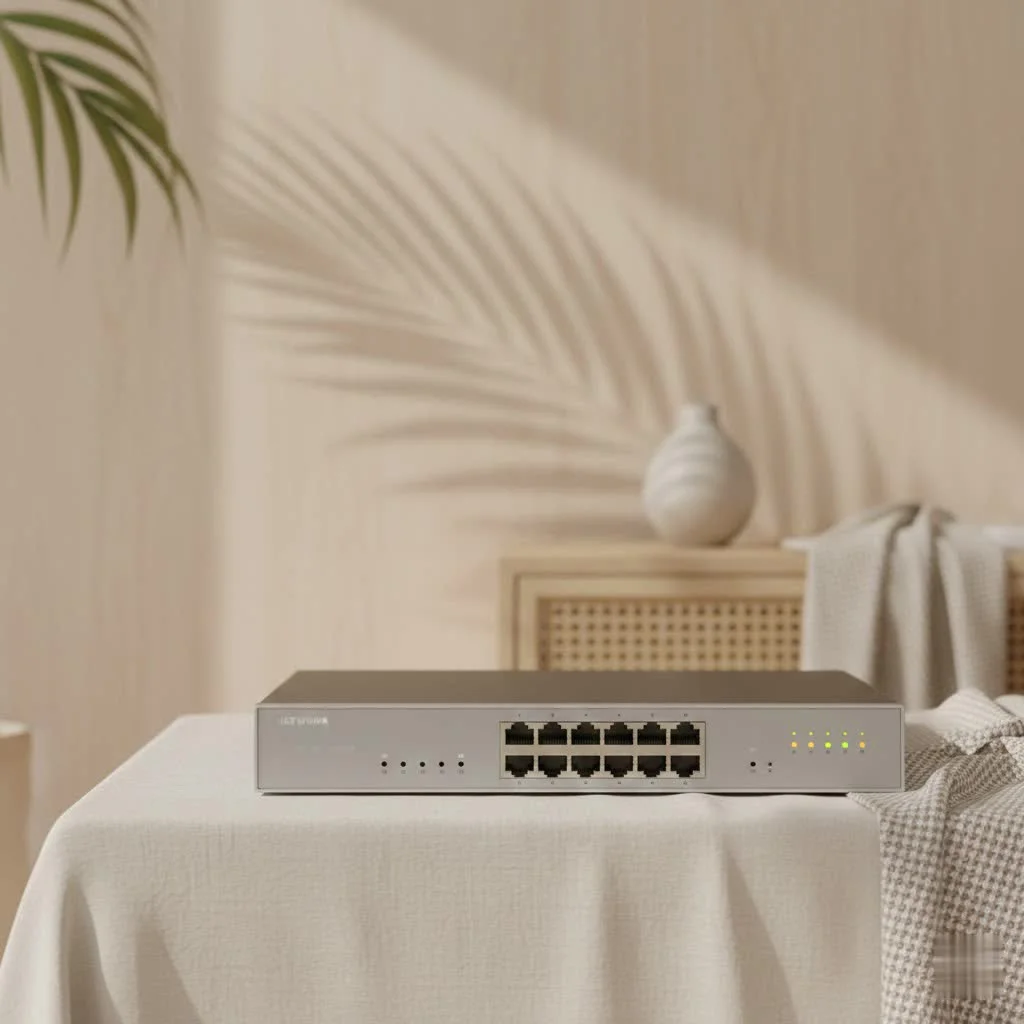
What Makes Juniper Switches Stand Out?
Juniper switches are engineered with a clear vision: to deliver a superior networking experience. This isn’t just about raw speed; it’s about intelligent design, operational simplicity, and unwavering security. Several core tenets define the Juniper advantage, making them a formidable force in network infrastructure.
The Brains Behind the Operation: Junos OS
Imagine having a single, consistent language spoken across all your critical network devices, from routers to firewalls and, of course, switches. That’s the power of Junos OS. Built on a modular, UNIX-based architecture, Junos provides a unified operating system that runs across the entire Juniper portfolio. This consistency drastically simplifies network management, reduces the learning curve for engineers, and minimizes configuration errors. Should one component experience an issue, Junos’s modularity ensures that other processes remain unaffected, significantly enhancing system stability and uptime. This means less troubleshooting time and more focus on strategic network development.
Unifying Your Network: Virtual Chassis Technology
One of Juniper’s most compelling innovations is Virtual Chassis technology. This allows multiple physical switches to interconnect and operate as a single, logical device. Think of it as combining several individual switches into one super-switch, all managed from a single IP address. This technology is a major upgrade for network scalability and high availability. Instead of managing dozens of individual switch configurations, you manage one, streamlining operations, reducing complexity, and making your network inherently more resilient. If one switch in the Virtual Chassis fails, the others can seamlessly take over, ensuring continuous network service.
Performance and Scalability You Can Trust
Modern networks demand exceptional performance to handle ever-increasing data volumes and application demands. Juniper switches are designed for wire-speed performance, delivering ultra-low latency and high throughput essential for real-time applications and cloud services. They support a wide range of Ethernet speeds, from 1 Gigabit (1G) to a blazing 400 Gigabit (400G) Ethernet, ensuring they can meet the demands of even the most data-intensive environments. Beyond speed, Juniper switches are built for growth. They readily integrate advanced technologies like VXLAN, EVPN, and segment routing, providing flexible and scalable network fabrics that can evolve alongside your organization’s needs, preventing costly rip-and-replace scenarios down the line.
Fortifying Your Defenses: Advanced Security
|
Our Picks for the Best Network Switch in 2026
As an Amazon Associate I earn from qualifying purchases.
|
||
| Num | Product | Action |
|---|---|---|
| 1 | TP-Link TL-SG105S-M2 - 5-Port Multi-Gigabit 2.5G Ethernet Switch - Unmanaged Network Switch - Ethernet Splitter - Plug & Play - Desktop/Wall Mount - Silent Operation |

|
| 2 | TP-Link TL-SG105, 5 Port Gigabit Unmanaged Ethernet Switch, Network Hub, Ethernet Splitter, Plug & Play, Fanless Metal Design, Shielded Ports, Traffic Optimization |
|
| 3 | TP-Link 24 Port Gigabit Ethernet Switch Desktop/ Rackmount Plug & Play Shielded Ports Sturdy Metal Fanless Quiet Traffic Optimization Unmanaged (TL-SG1024S) |
|
| 4 | TP-Link Litewave 5 Port Gigabit Ethernet Switch - Desktop Ethernet Splitter - Unshielded Network Switch - Plug & Play - Fanless Quiet - Unmanaged (LS1005G) |
|
| 5 | BrosTrend 2.5Gb Switch, 8 Port Network Switch 2.5 Gigabit, Unmanaged Ethernet Switch for Game Console, NAS, PC, Computer Networking Switch Plug & Play Fanless, Desktop Wall Mount, Lifetime Protection |
|
| 6 | TP-Link 5-Port Gigabit Ethernet Easy Smart Switch- Plug and Play - Desktop - Sturdy Metal w/Shielded Ports - Limited Lifetime Replacement (TL-SG105E), Black… |
|
| 7 | UGREEN 16 Port Gigabit Switch, Plug & Play Ethernt Switch, Standard/VLAN Mode, Unmanaged, Sturdy Metal, Fanless Quiet, Desktop & Wall Mount Network LAN Splitter Hub for Laptop, Printer, NAS, Router |
|
| 8 | TP-Link 8 Port Gigabit Ethernet Network Switch - Ethernet Splitter - Plug & Play - Fanless - Sturdy Metal w/ Shielded Ports - Traffic Optimization - Unmanaged - Lifetime Protection (TL-SG108) |
|
| 9 | UGREEN Ethernet Switch, 5 Port Gigabit Ethernet Splitter, Plug & Play, Wall Mount & Desktop Network Switch Hub, Unmanaged, Compact, with LED, Fanless Quiet, for Internet Cable, Laptop, Router, NAS |
|
| 10 | NETGEAR 8-Port Gigabit Ethernet Unmanaged Essentials Switch (GS308) - Home Network Hub, Office Ethernet Splitter, Plug-and-Play, Silent Operation, Desktop or Wall Mount |
|
In an era of relentless cyber threats, network security cannot be an afterthought. Juniper switches integrate robust security mechanisms directly into their infrastructure. Features like Media Access Control Security (MACsec) encrypt Ethernet traffic at the link layer, protecting data from eavesdropping and tampering. Juniper’s Unified Access Control (UAC) capabilities dynamically deliver network protection, guest access, and identity-based Quality of Service (QoS), enforcing precise, end-to-end security policies. Integrated anomaly-based threat detection also provides an extra layer of protection by identifying and blocking distributed denial of service (DDoS) attacks before they can cripple your operations.
Juniper Switch Series: Tailored for Every Network Need
Juniper offers distinct switch series, each optimized for specific network roles and deployment scenarios. Understanding these differences is key to selecting the perfect fit for your infrastructure.
The Versatile Workhorse: Juniper EX Series
The Juniper EX Series Ethernet switches are the go-to solution for converged enterprise branch, campus, and data center environments, as well as for service providers. They are designed to address the growing demands for high availability, unified communications, and virtualization, simplifying wired access networks while reducing risk and cost.
- EX2300 & EX3400: These models serve as excellent entry-level and mid-line switches, ideal for small offices, branches, and demanding enterprise access deployments. They offer compact, cost-effective solutions for low-density environments while providing reliable performance and flexible Virtual Chassis support.
- EX4100, EX4300 & EX4400: Stepping up in performance and features, these are versatile, high-performance, and often AI-driven, cloud-ready access and aggregation switches. They are perfect for campus and data center networks, supporting features like PoE++, MACsec AES-256, EVPN-VXLAN, and micro-segmentation with group-based policies. The EX4300, for instance, is highly versatile for both campus and data center networks.
- EX4600 & EX9200/EX9250: At the higher end, the EX4600 provides compact, high-density, and scalable solutions for data center and campus environments, supporting advanced Layer 2 and Layer 3 features. The modular EX9200 and EX9250 are designed for core and distribution applications, offering high availability and performance crucial for large enterprise networks and data centers with advanced features like MPLS and VXLAN support.
Powering the Data Center: Juniper QFX Series
When it comes to the demanding world of data centers, the Juniper QFX Series switches are purpose-built for high-performance data center fabrics and routing workloads. They excel in spine-and-leaf architectures, providing deep buffers, advanced routing scale, and high-speed uplinks from 1G all the way to 400G. The QFX Series includes models such as the QFX5100, QFX5110, QFX5120, QFX5130, QFX5200, QFX5210, QFX10002, and the modular QFX10000 Series (QFX10008 & QFX10016). These switches are the core components of modern, scalable data center fabrics, ensuring exceptional stability and robust performance for critical customer connectivity.
Choosing the Right Juniper Switch for Your Environment
Selecting the optimal Juniper switch involves carefully assessing your network’s specific requirements. Consider the following:
- Network Size and Scope: Is it a small branch office, a sprawling campus, or a high-density data center? This will guide you toward either the EX Series (for access, aggregation, campus) or the QFX Series (for data center core, spine, leaf).
- Traffic Demands and Speed Requirements: How much bandwidth do your applications and users need? Look at port speeds (1G, 10G, 25G, 40G, 100G, 400G) and switching capacity.
- Power over Ethernet (PoE): Do you need to power IP phones, wireless access points, or security cameras directly from the switch? Many EX Series models offer PoE and PoE++.
- Scalability and Future Growth: Plan for tomorrow’s needs. Juniper’s Virtual Chassis technology and support for advanced fabric solutions like EVPN-VXLAN ensure your investment can grow with you.
- Integration: If you already have Juniper devices, the consistent Junos OS across products simplifies integration and management.
Navigating the Juniper Ecosystem: Management and Automation
Juniper’s commitment to simplifying network operations extends deeply into its management and automation tools. The Junos Command Line Interface (CLI) provides granular control and a powerful, consistent experience for network engineers. Beyond the CLI, Juniper offers advanced platforms that leverage AI and intent-based networking to streamline operations:
- Junos Space & Junos Fusion Enterprise: These tools consolidate system monitoring and simplify the management of interconnected switches, allowing them to operate as a single logical device.
- Juniper Mist AI-Native Networking Platform: Juniper has integrated AI into its networking solutions, providing predictive insights into application performance and user experience. This helps NetOps teams proactively identify and resolve network and application issues, significantly reducing troubleshooting time.
- Juniper Apstra: For data center environments, Apstra provides intent-based networking, automating the entire data center lifecycle from design to day-2 operations. It allows you to define your network intent, and Apstra automatically generates correct, vendor-specific configurations, drastically speeding up deployment and ensuring your network continuously matches your operational goals.
Expert Insights: A Network Architect’s View
“Juniper’s commitment to a unified OS with Junos across their entire product line is a major upgrade for network engineers. It drastically simplifies management and reduces the learning curve, allowing us to deploy and troubleshoot with unparalleled efficiency. The blend of high-performance hardware and intelligent software, especially with the advancements in AI-driven operations, positions Juniper as a leader for future-proof networks.” – Dr. Anya Sharma, Principal Network Architect at GlobalTech Solutions.
Frequently Asked Questions
What is the main difference between Juniper EX and QFX switches?
The Juniper EX Series is primarily designed for enterprise branch, campus, and access/aggregation layers, offering versatility and features for converged networks. The Juniper QFX Series, on the other hand, is specifically engineered for high-performance data center fabrics, routing workloads, and spine-and-leaf architectures, supporting extremely high speeds and deep buffers.
What is Junos OS and why is it important for Juniper switches?
Junos OS is Juniper’s proprietary, UNIX-based operating system that runs across all its networking products. Its importance lies in providing a unified, consistent, and modular platform that simplifies management, enhances stability, and reduces operational errors for Juniper switches and other devices.
Do Juniper switches support Power over Ethernet (PoE)?
Yes, many Juniper EX Series switches offer Power over Ethernet (PoE) and PoE+ (IEEE 802.3at) capabilities, and some newer models even support PoE++, allowing them to power various network devices like IP phones, wireless access points, and security cameras directly.
How does Juniper’s Virtual Chassis technology work?
Juniper’s Virtual Chassis technology allows multiple physical switches to be interconnected and operate as a single logical device. This simplifies management by providing a single point of control and enhances scalability and high availability by allowing resources to be pooled and traffic to continue flowing even if one physical switch fails.
Are Juniper switches suitable for small businesses?
Yes, Juniper offers entry-level EX Series switches, such as the EX2300, which are compact, cost-effective, and designed for small office wiring closets and other low-impact applications, making them suitable for small businesses seeking reliable networking solutions.
How do Juniper switches compare to Cisco switches?
Juniper switches are highly regarded for their performance, reliability, and security, often excelling in areas like evaluation and contracting. While Cisco generally holds a larger market share and offers a more diverse selection of switches across all applications, both brands boast impressive average scores in switch ratings and are considered solid choices in the networking industry.
Conclusion
Juniper switches represent a powerful blend of innovation, performance, and reliability, making them an excellent choice for organizations aiming to build a resilient and future-proof network. From the unifying simplicity of Junos OS and the scalable efficiency of Virtual Chassis technology to advanced security features and robust performance, Juniper delivers a comprehensive solution for every network challenge. Whether you’re optimizing a campus network with the versatile EX Series or building a high-performance data center fabric with the QFX Series, Juniper provides the tools to ensure your network operates seamlessly. By embracing Juniper switches, you’re not just investing in hardware; you’re transforming your network into a dynamic, secure, and highly efficient ecosystem ready to meet the demands of tomorrow. Explore the capabilities of Juniper switches and unlock the full potential of your network today.
Frequently Asked Questions
What is the main difference between Juniper EX and QFX switches?
The Juniper EX Series is designed for enterprise branch, campus, and access/aggregation layers, offering versatility for converged networks. In contrast, the Juniper QFX Series is engineered for high-performance data center fabrics, routing workloads, and spine-and-leaf architectures, supporting speeds up to 400G and deep buffers.
What is Junos OS and why is it important for Juniper switches?
Junos OS is Juniper's proprietary, UNIX-based operating system that runs across all its networking products. Its importance lies in providing a unified, consistent, and modular platform that simplifies management, enhances stability, and reduces operational errors for Juniper switches and other devices.
Do Juniper switches support Power over Ethernet (PoE)?
Yes, many Juniper EX Series switches offer Power over Ethernet (PoE) and PoE+ (IEEE 802.3at) capabilities. Some newer models even support PoE++, allowing them to power various network devices like IP phones, wireless access points, and security cameras directly.
How does Juniper's Virtual Chassis technology work?
Juniper's Virtual Chassis technology allows multiple physical switches to be interconnected and operate as a single logical device. This simplifies management by providing a single point of control and enhances scalability and high availability, ensuring continuous network service even if one physical switch fails.
Are Juniper switches suitable for small businesses?
Yes, Juniper offers entry-level EX Series switches, such as the EX2300, which are compact, cost-effective, and designed for small office wiring closets and other low-impact applications. These models provide reliable networking solutions suitable for small businesses.
How do Juniper switches compare to Cisco switches?
Juniper switches are highly regarded for their performance, reliability, and security, often excelling in evaluation and contracting. While Cisco generally holds a larger market share and offers a more diverse selection, both brands boast impressive average scores in switch ratings and are considered solid choices in the networking industry.
Get our weekly buyer guide
Practical specs, not advice. Unsubscribe anytime.

Our company has been relying on Juniper devices for years, and their Virtual Chassis technology has been instrumental in simplifying our network architecture. We’ve been able to scale our operations without adding unnecessary complexity, which is a huge win for our IT team. The reliability is unmatched, and we rarely have any downtime.
I’ve been using Juniper switches for a while now, and the Junos operating system is truly a game-changer for network management. It’s incredibly intuitive once you get the hang of it, and the advanced features make configuration a breeze. My only minor gripe is that the initial setup can be a bit daunting for someone not already familiar with enterprise-grade equipment.
I was really looking forward to the integrated security mechanisms like MACsec, but I found the documentation for setting it up to be a bit sparse for my home lab. The switch itself is solid and performs well, but I had to spend a lot of time digging through forums to get the security features configured correctly. It’s powerful, but not exactly plug-and-play for advanced functions.
I recently upgraded my small business network with a Juniper switch, and the difference is night and day. The high-speed performance, especially with the 400 Gigabit Ethernet capabilities, has completely eliminated the bottlenecks we used to experience. It was a significant investment, but seeing how smoothly everything runs now, it was definitely worth it for the improved efficiency.